

Somewhere around hour four of sitting, your body starts sending small complaints. A tight lower back. Stiff shoulders creeping up toward your ears. A neck that's forgotten how to turn without protest. None of it feels urgent enough to stop for, so most of us just push through, and it adds up, day after day.
You don't need a gym membership or even a full break to counter it. These seven stretches all work right at a desk, most in under a minute each, and together they target the areas that take the biggest hit from sitting.
Why sitting affects your body the way it does
Prolonged sitting tends to shorten certain muscle groups, particularly the hip flexors at the front of your hips, while lengthening and weakening others, like the muscles supporting your upper back. Combined with a forward head position from looking at a screen, this creates a fairly predictable pattern of tightness: tight hips, tight chest and shoulders, and a strained neck.
The good news is that this pattern is just as predictable to counter, once you know where to focus.
1. Neck rolls
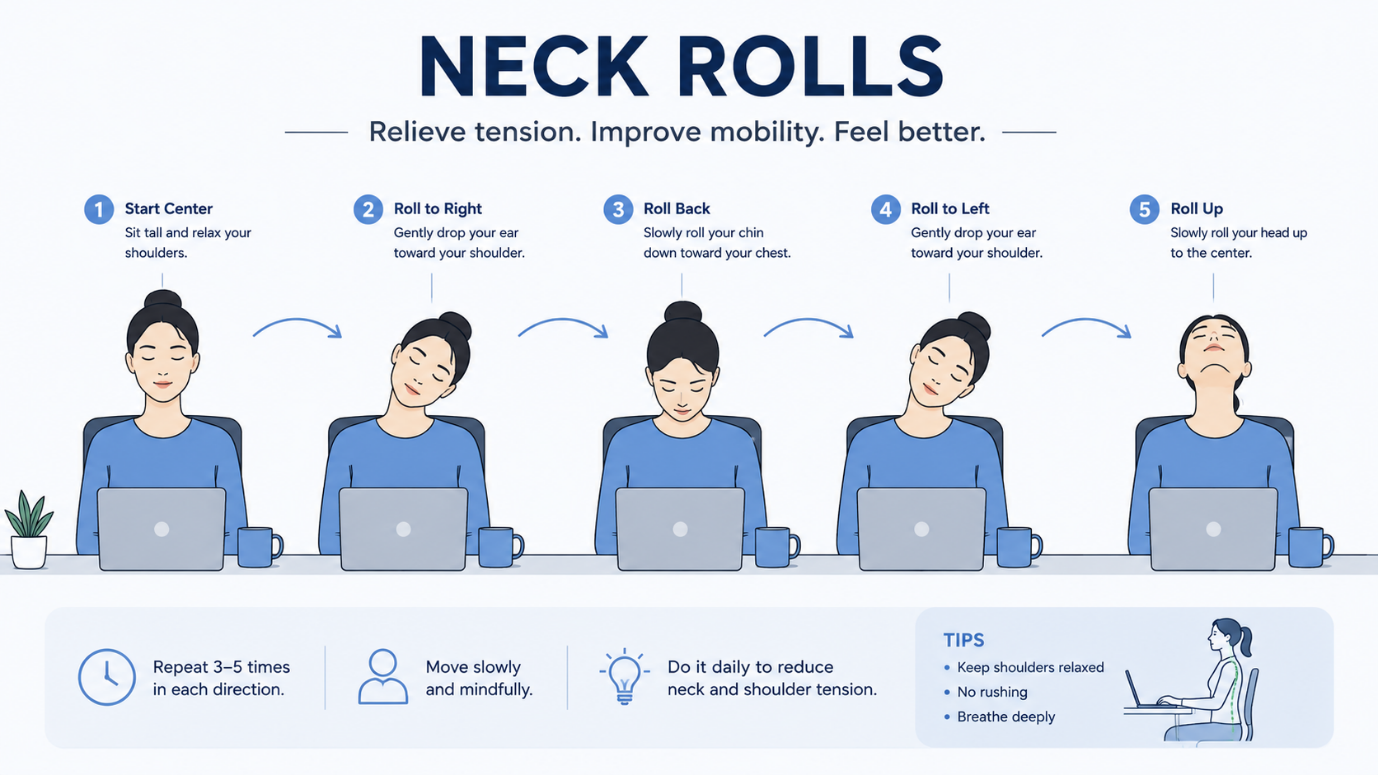
Sitting slowly, drop your chin toward your chest, then gently roll your head to one side, back, the other side, and forward again in a slow circle. Do three rotations one way, then three the other.
This helps ease the tension that builds up from hours of looking slightly downward at a screen, which most of us do without noticing.
2. Shoulder blade squeezes
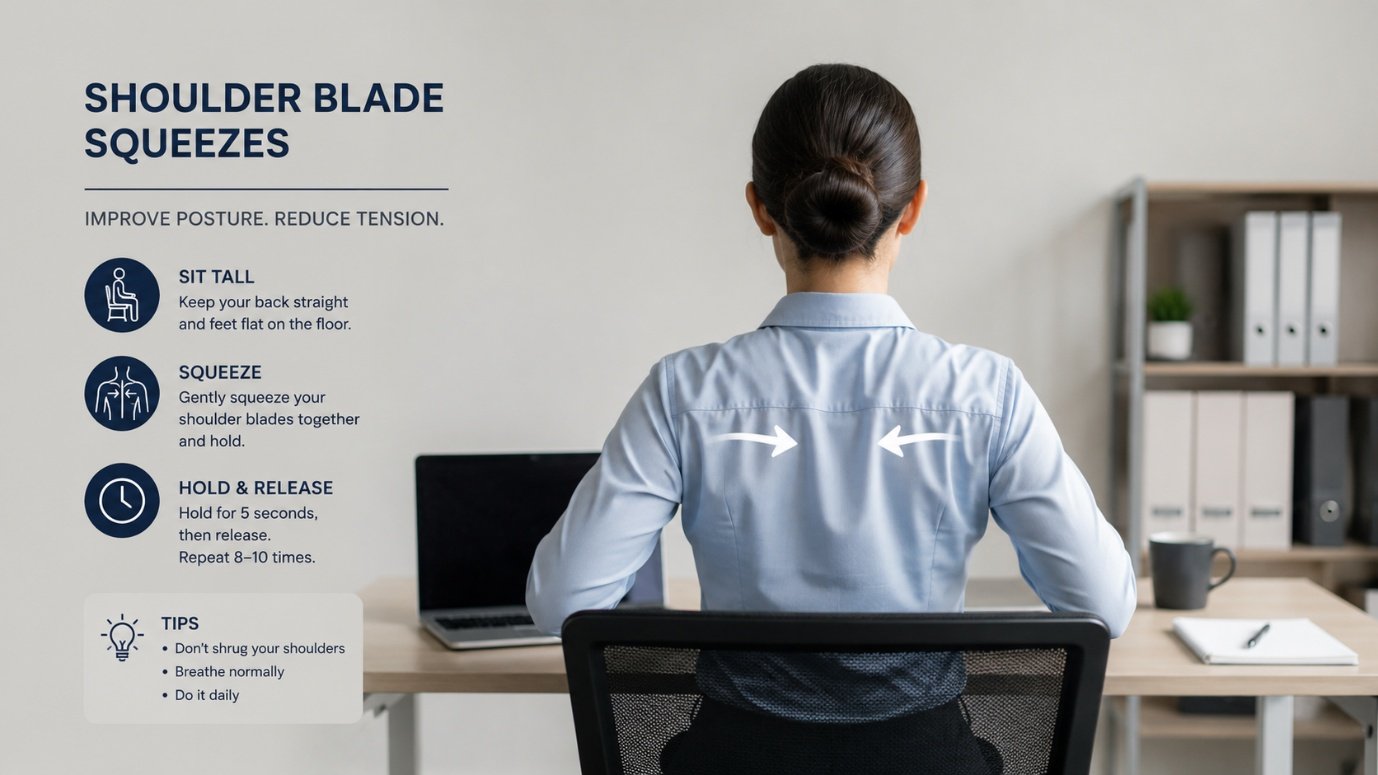
Sit up tall, draw your shoulder blades back and down, as though trying to hold a pencil between them, and hold for five seconds before releasing. Repeat ten times.
This directly counters the rounded-shoulder posture that comes from hours at a keyboard, and it's subtle enough to do without anyone noticing, even in a meeting.
3. Seated spinal twist
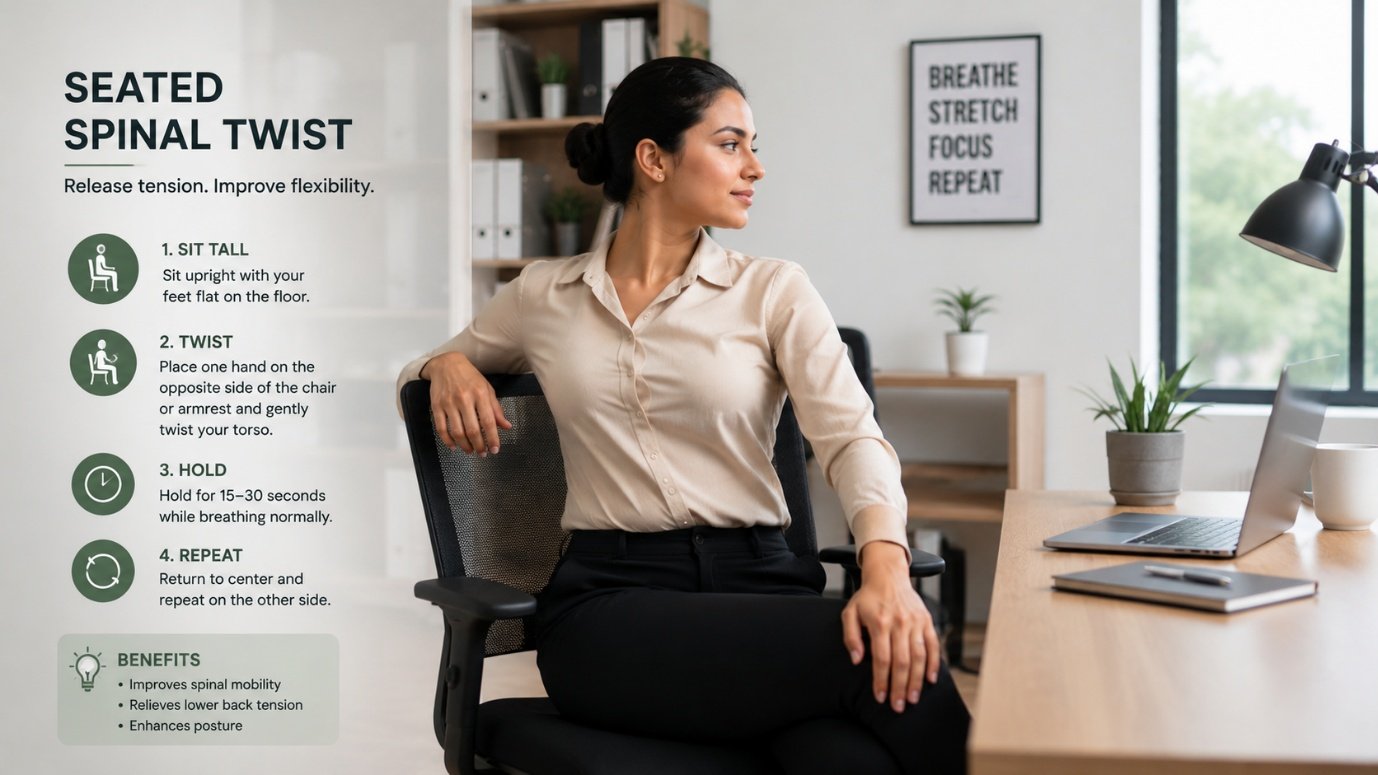
Sit tall, place one hand on the opposite knee or the back of your chair, and gently twist your torso toward that side, holding for a few breaths. Repeat on the other side.
Your spine doesn't get much rotation during a normal day of sitting, and this simple twist helps restore some of that range of motion.
4. Wrist and forearm stretch
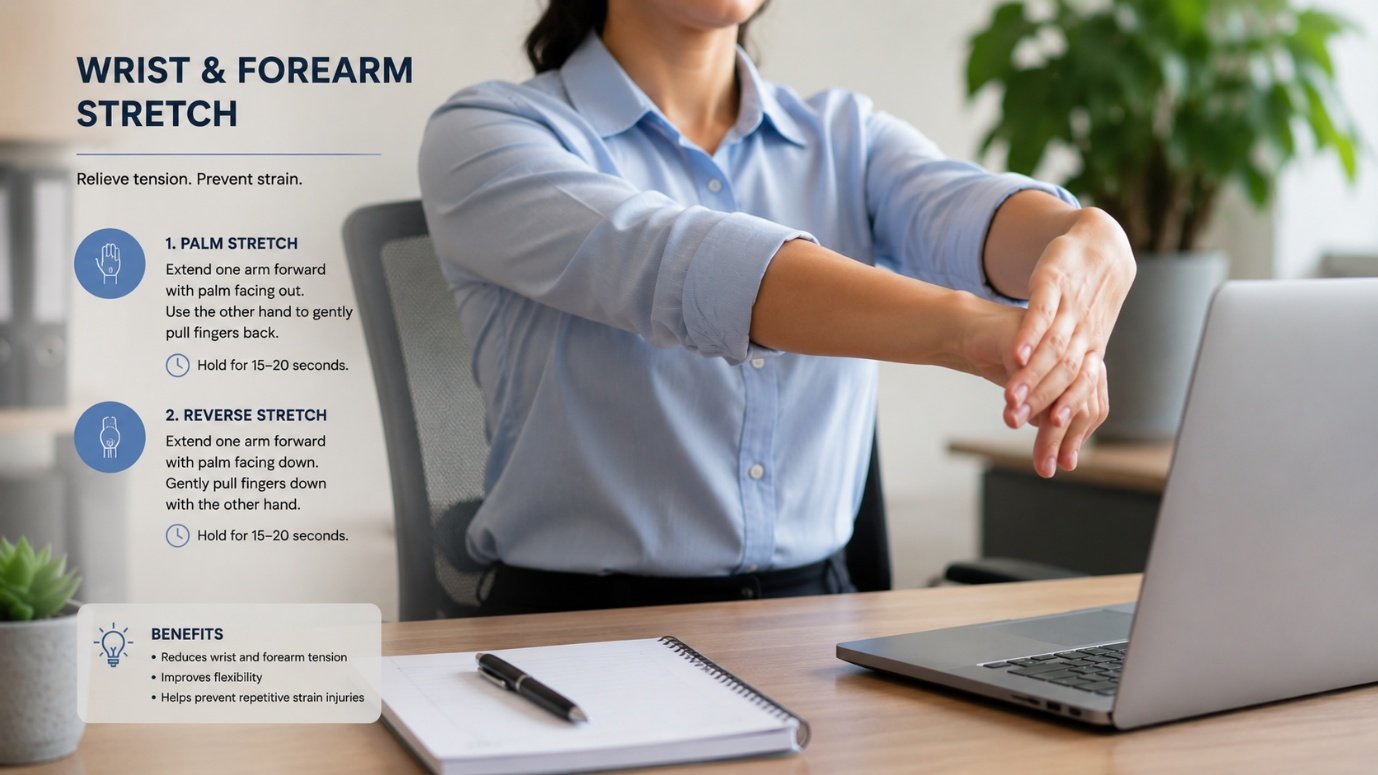
Extend one arm forward, palm facing up, and gently pull the fingers back with your other hand until you feel a stretch along the forearm. Hold for 15-20 seconds, then switch, and repeat with the palm facing down.
If you type for a living, your wrists and forearms are doing more repetitive work than almost any other part of your body, and this small stretch takes almost no time.
5. Seated hip flexor stretch
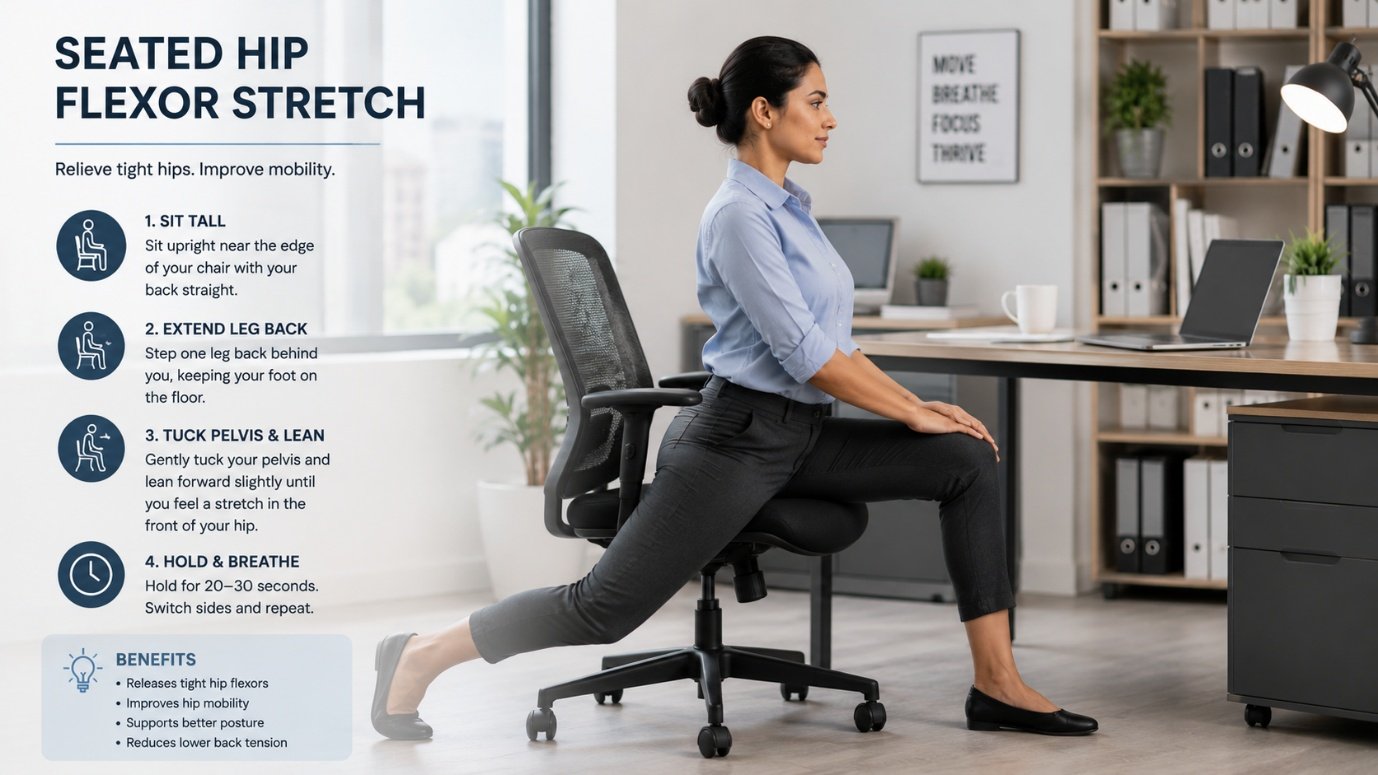
Sit at the very edge of your chair, extend one leg straight back as far as is comfortable while keeping the other foot planted, and gently lean forward slightly. Hold for 20-30 seconds, then switch sides.
Since hip flexors are among the most affected muscles from prolonged sitting, this one is worth prioritizing if you only have time for a couple of these.
6. Chest opener
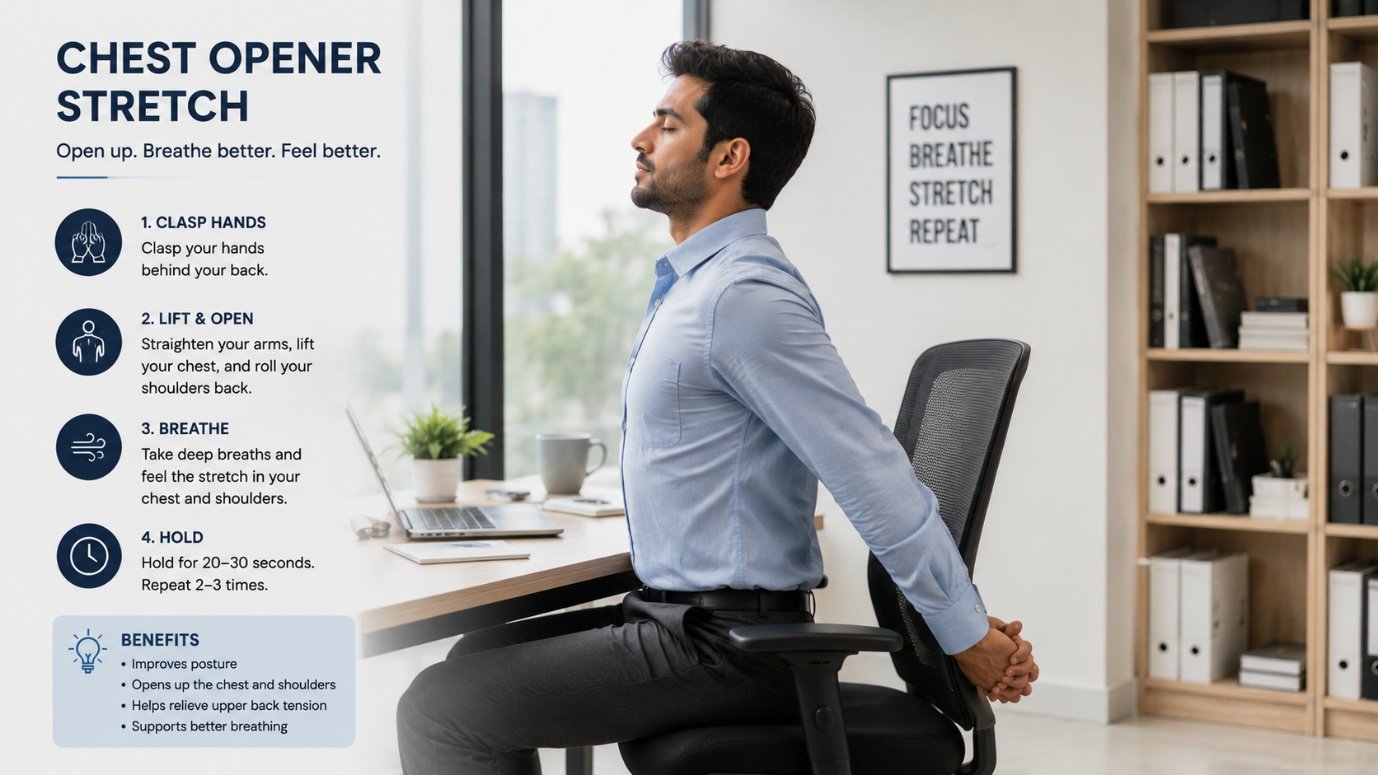
Clasp your hands behind your back, straighten your arms, and gently lift them slightly while opening your chest forward. Hold for 15-20 seconds.
This directly counters the forward, hunched position most of us fall into over a screen-filled day, and it tends to feel noticeably good almost immediately.
7. Standing forward fold
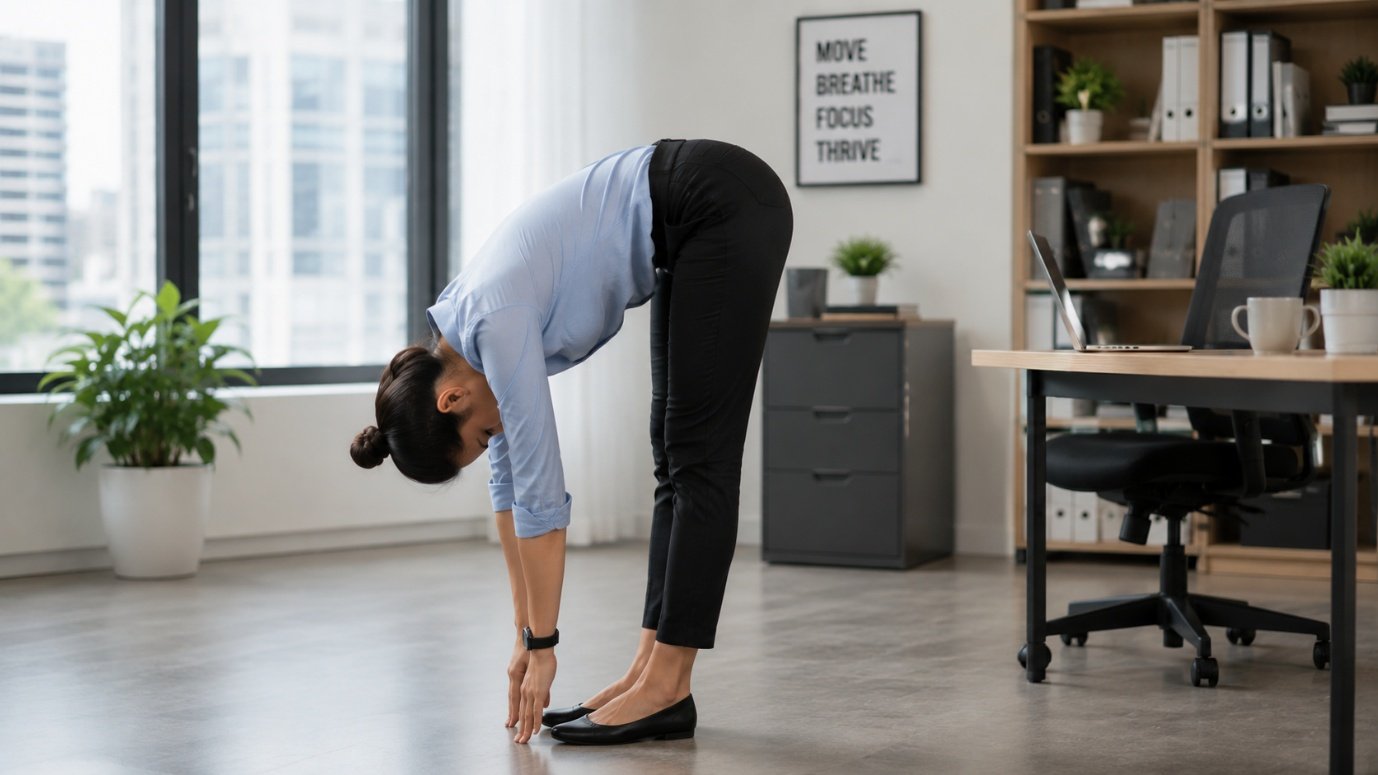
If you can stand up for this one, even just briefly: feet hip-width apart, slowly hinge forward from your hips, letting your head and arms hang loosely. Hold for 20-30 seconds, bending your knees slightly if needed.
This gently stretches your entire lower back and the backs of your legs, and it doubles as a good reset for your mind, not just your body.
Making these part of the day, not an afterthought
A few small habits make it far more likely these actually happen:
Attach them to something you already do. Try the neck rolls and shoulder squeezes every time you're on a call, or the spinal twist between meetings.
Set a recurring reminder. Even a simple alarm every 90 minutes to stand and move for a minute makes a noticeable difference over a full week.
Don't wait until you're already stiff. Doing a couple of these proactively through the day works better than trying to undo hours of stiffness in one long session at the end.
A quick note on persistent pain
These stretches are meant for the everyday tightness that comes from ordinary desk work, not for ongoing or sharp pain, which is worth having a doctor or physiotherapist look at directly. If a particular stretch causes pain rather than a mild, comfortable pull, stop and skip that one.
For the everyday stiffness that comes from a normal workday, though, these seven stretches, done consistently, can make a genuinely noticeable difference. Your body wasn't built to hold one position for eight hours straight. A minute here and there throughout the day goes a long way toward undoing that.



0 comments
Sign in to leave a comment.
No comments yet - be the first to share your thoughts.