
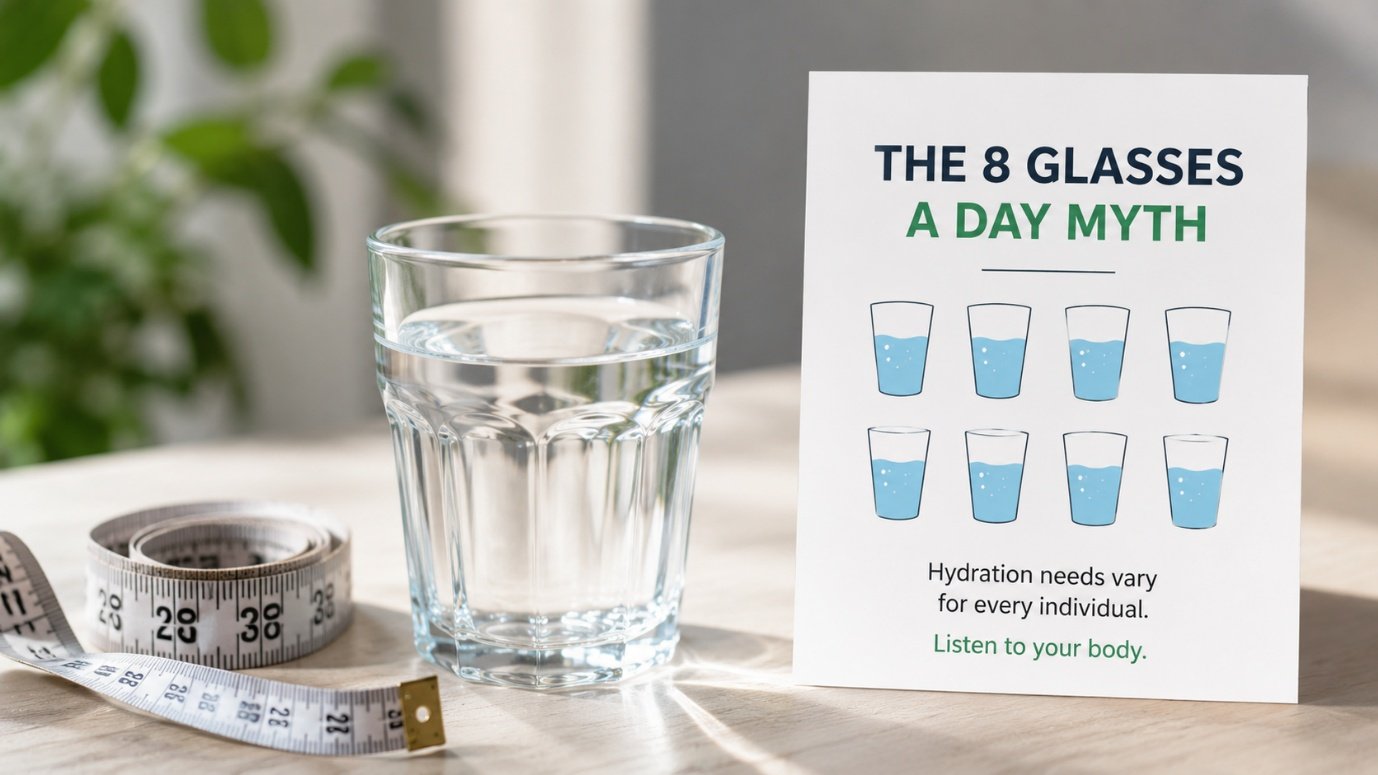
"Drink 8 glasses of water a day." You've heard it so many times it feels less like advice and more like a fact of nature, right up there with the sky being blue. Except it isn't quite a fact. It's a rough estimate that got repeated so often it calcified into a rule, and it doesn't actually fit most people particularly well.
That doesn't mean hydration doesn't matter. It matters a great deal. It just means the real picture is a little more interesting, and a little more personal, than a single fixed number.
Where the 8-glasses rule actually came from
The number traces back to a mid-20th-century recommendation that suggested roughly one milliliter of water per calorie consumed, which for an average diet worked out to somewhere around eight cups. Somewhere along the way, an important detail got dropped from that original guidance: it included water from food, not just from drinks. Once that nuance disappeared, "eight glasses of water" became the whole message, repeated on posters and water bottles ever since.
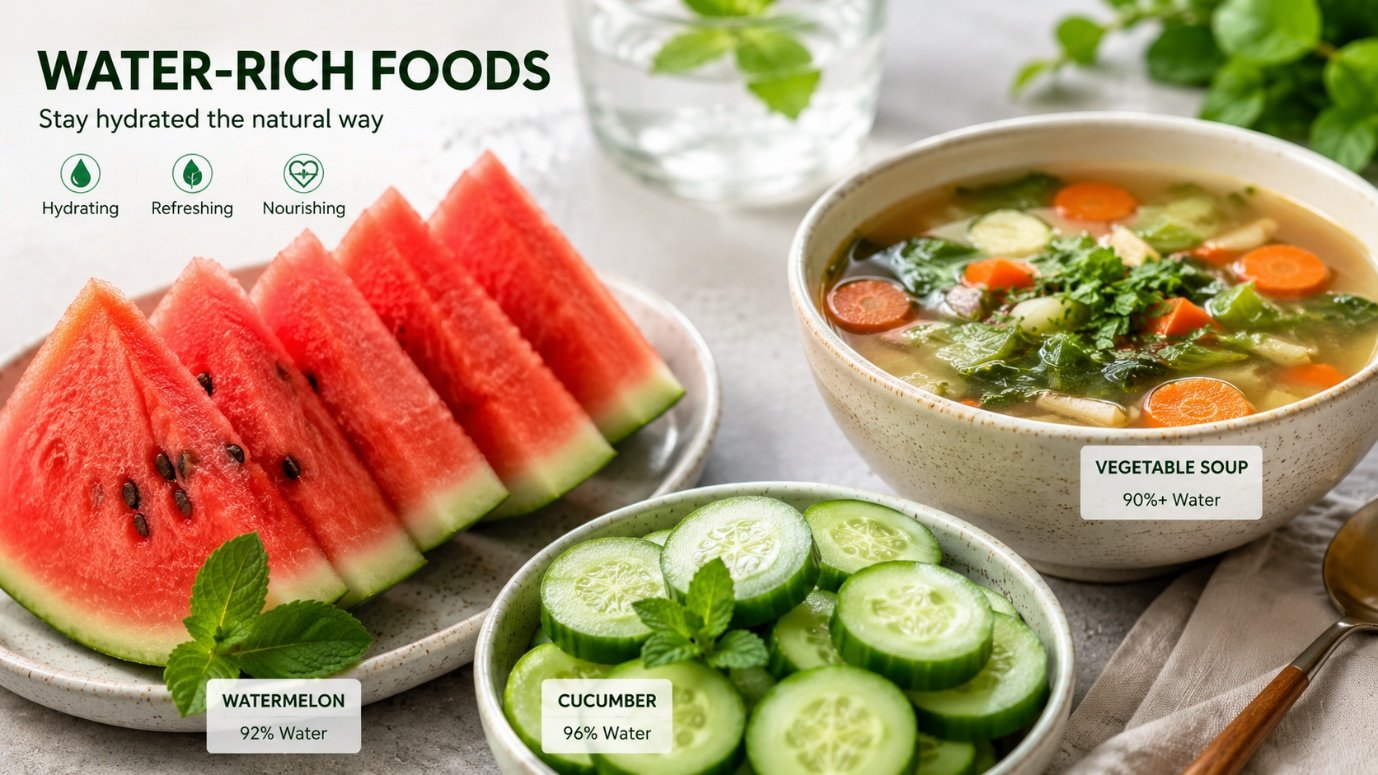
In reality, a meaningful portion of your daily fluid intake, often estimated at around 20 percent, comes from the food you eat. Soups, fruits, vegetables, yogurt, and even bread all contribute. So if you're only counting glasses of water and ignoring everything else, you might be hitting your real hydration needs without realizing it, or falling short even while diligently tracking eight glasses.
Why one number was never going to work for everyone
Hydration needs shift based on a surprising number of factors:
Body size. A larger body generally needs more fluid than a smaller one, simply due to more tissue and a larger blood volume to maintain.
Activity level. Someone who sits at a desk all day has very different fluid needs than someone doing physical labor or exercising for an hour.
Climate. Heat and humidity increase fluid loss through sweat, sometimes dramatically, even if you don't feel like you're sweating much.
What you eat and drink. Coffee, tea, and high-water foods like cucumber or watermelon all factor into your overall intake, not just plain water.
Individual differences. Metabolism, medications, and even pregnancy or breastfeeding can shift fluid needs meaningfully.
Given all of that, a single universal number was always going to be an oversimplification. It's a reasonable starting point, not a strict target you need to hit exactly.
So how do you actually know if you're hydrated enough?
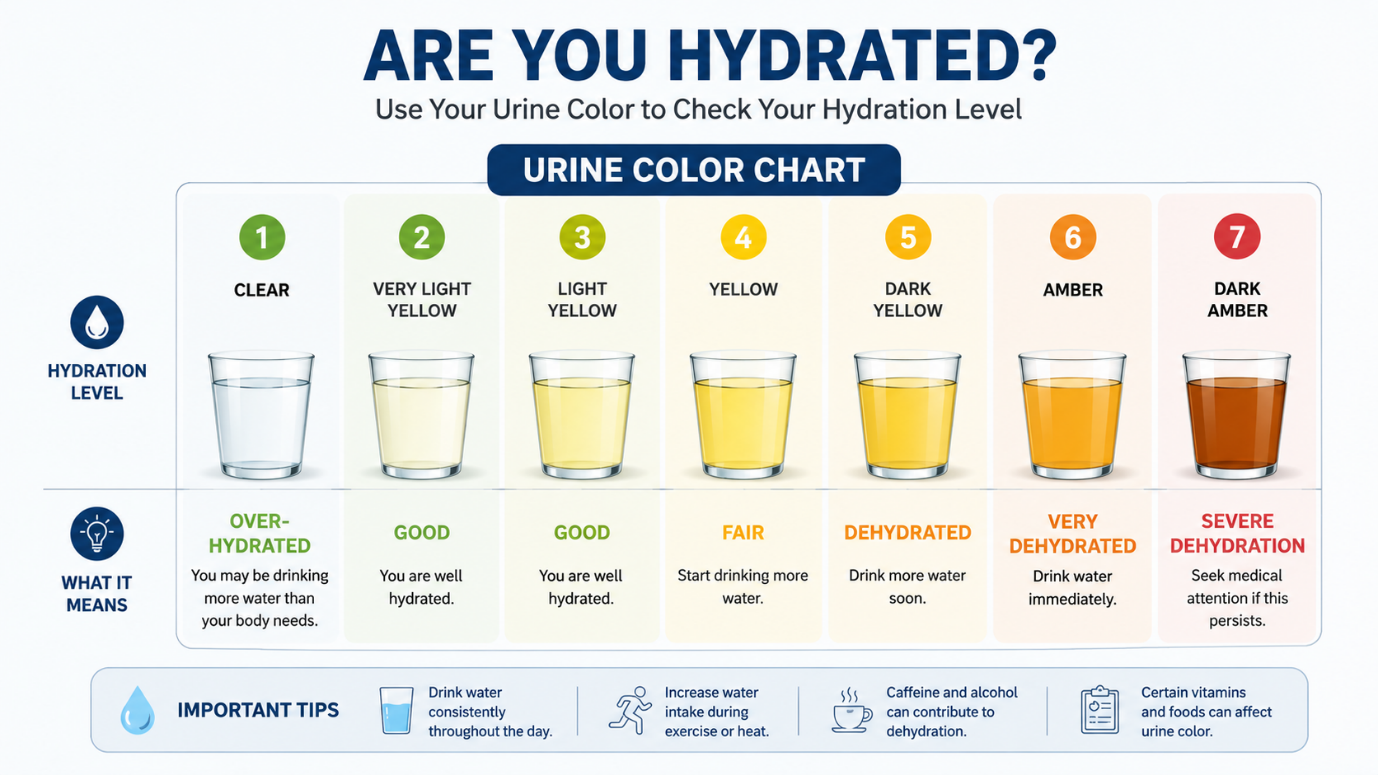
Rather than obsessively counting glasses, a few simple, practical signals tend to be far more useful:
Urine color. This is genuinely one of the most reliable everyday indicators. Pale yellow, similar to lemonade, generally suggests good hydration. Dark yellow, closer to apple juice, is a sign to drink more.
Thirst. The old advice that "if you're thirsty, you're already dehydrated" turns out to be overstated for most healthy people in everyday situations. Thirst is a reasonably good, if slightly delayed, signal, not something to ignore until it's too late.
Energy and focus. Mild dehydration can show up as unexplained fatigue or difficulty concentrating before it shows up as obvious thirst. If an afternoon slump keeps happening around the same time, it's worth checking whether you've had much to drink that day.
Common hydration myths worth retiring
"You need exactly 8 glasses, no more, no less." As covered above, this was always a rough estimate, not a precise target, and it varies by person and circumstance.
"Coffee and tea don't count because they're diuretics." For most people who drink caffeine regularly, the mild diuretic effect is outweighed by the fluid itself, meaning coffee and tea do still contribute meaningfully to hydration, despite the popular myth.
"You can't drink too much water." You actually can, though it typically requires drinking an extreme amount in a very short window, well beyond normal daily habits. For the average person going about a normal day, this isn't something to worry about, but it's worth knowing the "more is always better" idea isn't quite right either.
"Thirst means you're already badly dehydrated." As mentioned, thirst is a reasonably timely signal for most healthy adults in typical day-to-day conditions, not a sign you've already fallen dangerously behind.
Building a more realistic hydration habit
Instead of rigidly tracking ounces, a few small habits tend to work better long-term:
Start the day with a glass of water before coffee. You wake up mildly dehydrated after hours without fluids, and this simple habit is an easy win before the day gets busy.
Keep water visibly nearby. A glass or bottle on your desk gets used far more often than water that requires a trip to the kitchen.
Let food help. Soups, fruit, and vegetables genuinely count. A hydrating meal is doing real work, not just filling you up.
Adjust for the day, not a fixed rule. A hot day, a workout, or an illness all mean you'll likely need more than an ordinary quiet day at a desk.
Watch the color, not the count. If your urine is consistently pale yellow and your energy feels normal, you're very likely doing fine, regardless of exactly how many glasses that added up to.
The bottom line
Hydration matters, genuinely. But "eight glasses" was never a precise medical target, it was a rough, well-meaning estimate that got treated as gospel. Your actual needs depend on your body, your activity, your climate, and your diet, and the best guide isn't a fixed number, it's paying attention to a few simple, honest signals your body is already giving you.
Drink when you're thirsty, keep an eye on the color, let your meals contribute, and adjust for hot days or hard workouts. That's a far more realistic approach than chasing an arbitrary number that was never quite right to begin with.


0 comments
Sign in to leave a comment.
No comments yet - be the first to share your thoughts.