
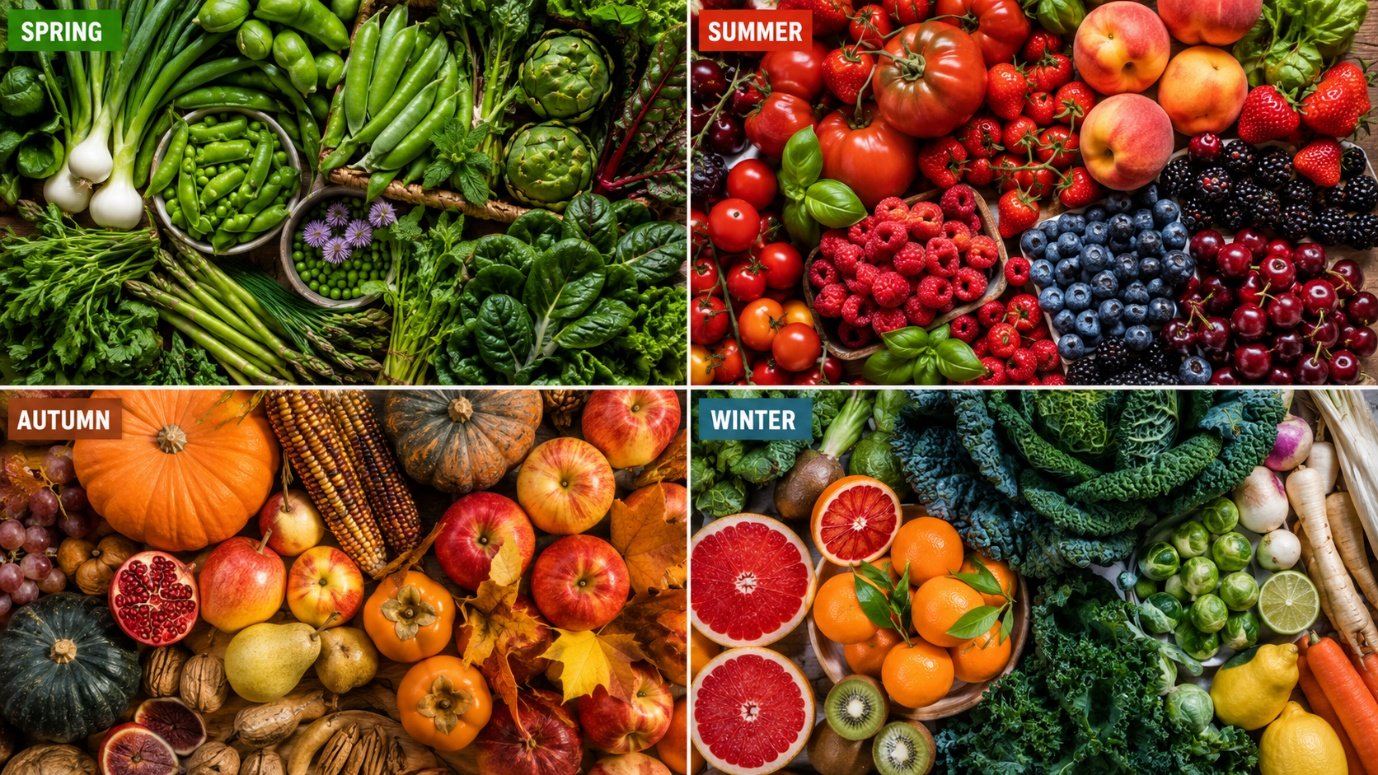
Walk into most grocery stores in the middle of winter and you'll find strawberries, sitting there as if it's July. It's a strange kind of convenience, one that's easy to take for granted, and one that's quietly disconnected most of us from any sense of what's actually in season where we live.
Seasonal eating isn't about being a purist or refusing every out-of-season ingredient. It's a simpler, more practical idea: food picked closer to its natural season tends to be fresher, more flavorful, and often more affordable, and building meals around it can genuinely change how your food tastes and how you eat, without much extra effort.
Why seasonal food tends to taste better
Produce picked at peak ripeness and eaten relatively soon after has less time to lose flavor and nutrients in transport and storage. A tomato grown locally in summer and eaten within days is a fundamentally different experience from one picked unripe, shipped long distances, and ripened artificially along the way. This is a big part of why "in-season" produce so often tastes noticeably better, not because of anything mystical, just simple freshness.
A general seasonal guide
Exact timing varies by region and climate, so treat this as a general starting point rather than a strict calendar, and check what's actually being sold locally near you.
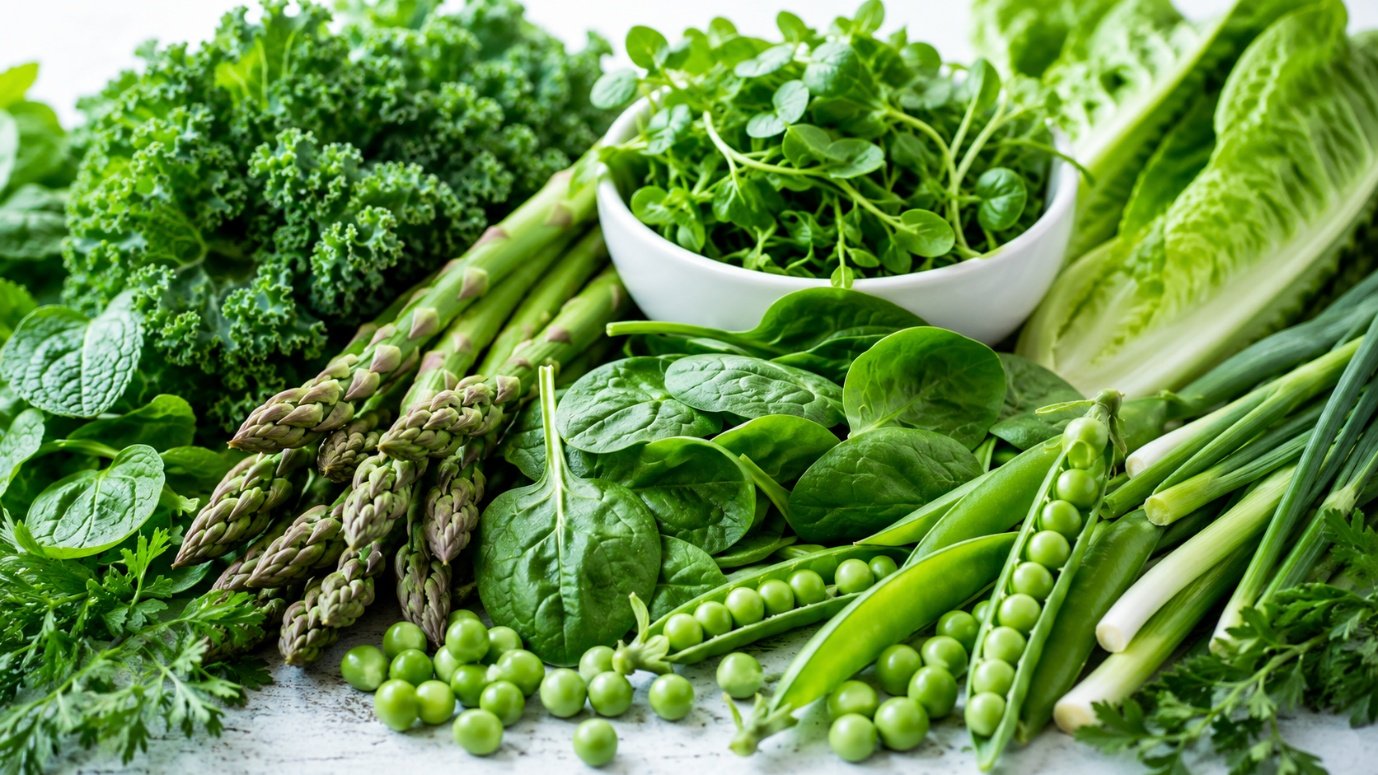
Spring tends to bring lighter, greener foods: leafy greens, peas, asparagus, and early herbs. After a winter of heavier, stored foods, this shift toward lighter produce often lines up naturally with how people tend to want to eat as the weather warms.
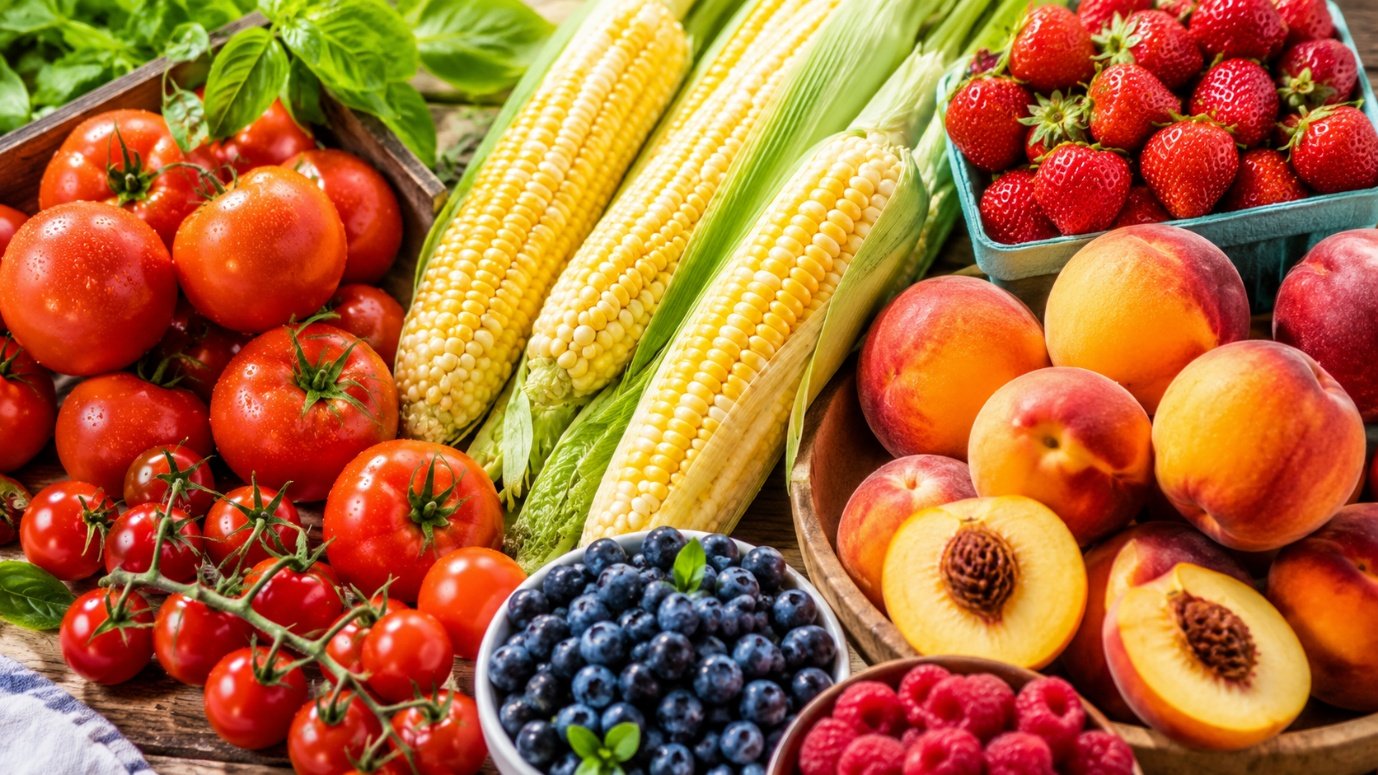
Summer is when most of the produce people associate with peak flavor shows up: tomatoes, corn, berries, stone fruits, and cucumbers. This is generally the most abundant and varied season for fresh produce in most climates.
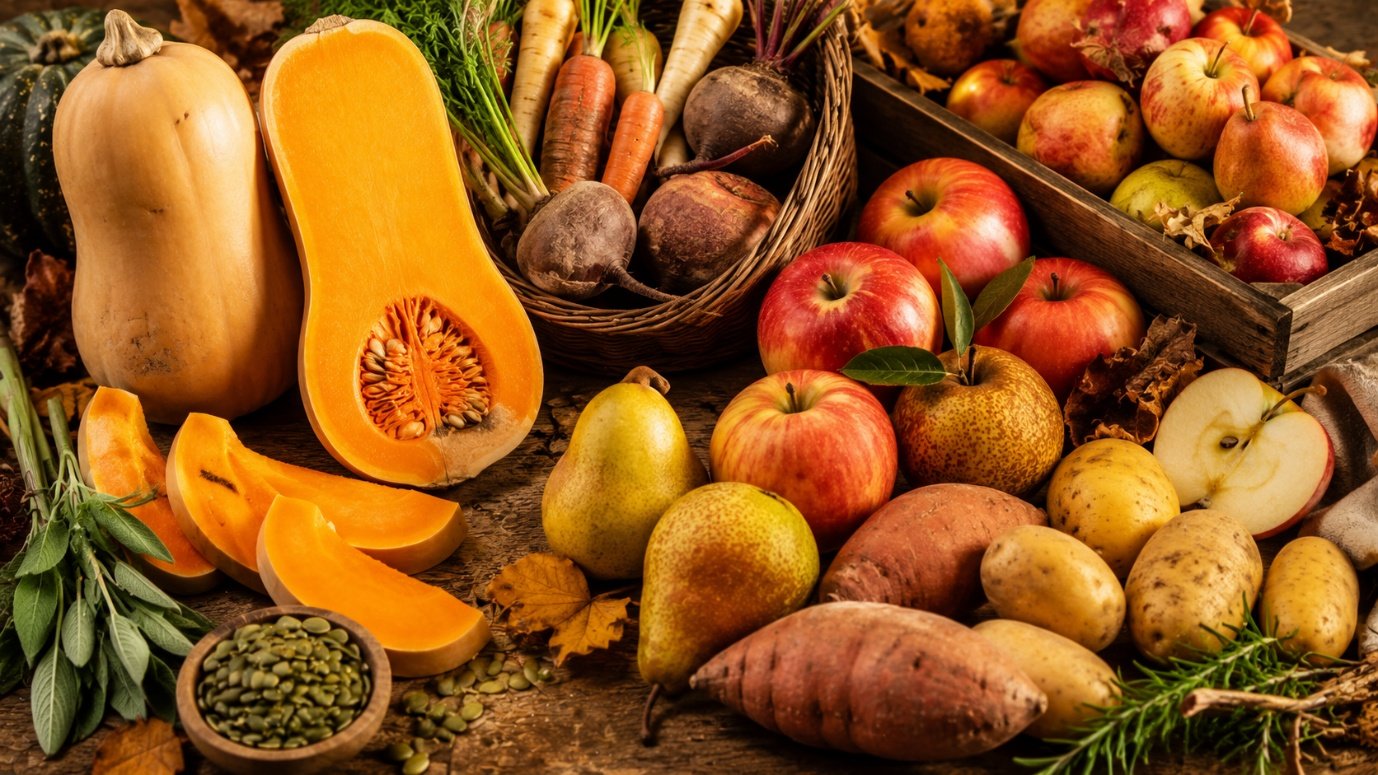
Autumn shifts toward heartier foods: squash, root vegetables, apples, and pears. These naturally lend themselves to warming, slow-cooked meals as the weather cools.
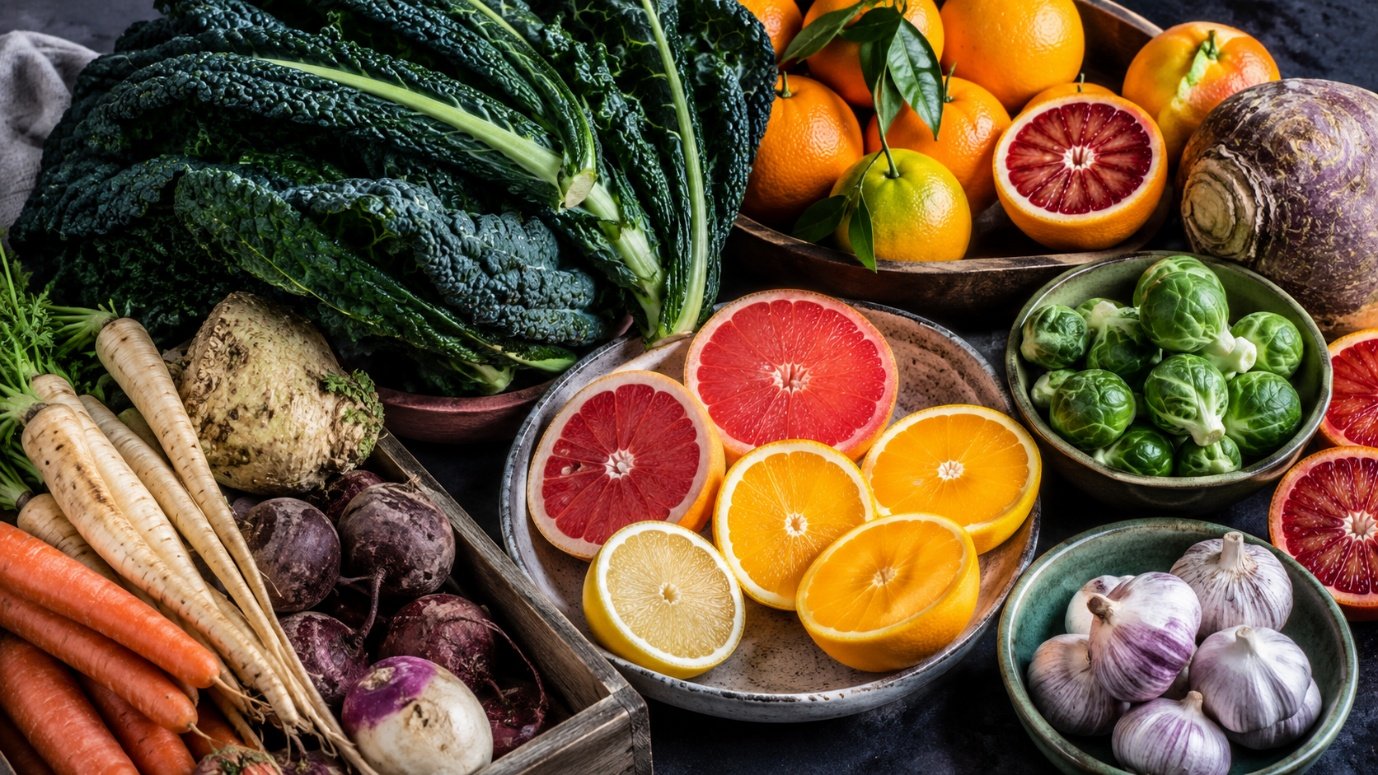
Winter tends to be the leanest season for fresh local produce in most places, leaning on stored root vegetables, hardy greens like kale, and citrus in many regions. This is also where frozen produce becomes genuinely useful, since vegetables are typically frozen at peak ripeness, often preserving more nutritional value than "fresh" produce that's traveled a long distance.
It's not about being rigid
A common misconception is that seasonal eating means giving up everything out of season entirely. That's not really the practical version of this. A more realistic approach is simply shifting the default, building the bulk of your meals around what's currently in season, while still allowing space for other things you enjoy.
If you love bananas, which don't grow seasonally in most temperate climates at all, that's fine. Seasonal eating isn't a strict rulebook, it's a general orientation, not an all-or-nothing commitment.
The cost angle
Beyond flavor, there's a practical financial benefit. When a particular produce item is in season and abundant, prices generally drop because supply is high and it hasn't traveled as far. Buying strawberries in the middle of winter usually means paying a premium for something shipped a long distance out of season. Buying them at the height of their local season is often both cheaper and better tasting, a rare case where the more affordable option is also the higher-quality one.
A simple way to start
You don't need to memorize seasonal charts or become an expert overnight. A gentler approach:
Visit a local farmers market or produce section with fresh eyes, and notice what's actually abundant and reasonably priced right now, since retailers often price seasonal abundance attractively.
Build one meal a week around whatever looks best and freshest, rather than a fixed recipe, and let the ingredient lead.
Get comfortable substituting. If a recipe calls for something out of season, look for a similar in-season alternative rather than assuming you need the exact ingredient.
Don't overthink out-of-season staples. Onions, garlic, and many pantry basics are available fairly consistently year-round without much of a seasonal penalty.
The bigger picture
Seasonal eating won't dramatically transform your health on its own, and it's not meant to replace other things that matter, like overall variety and balance. What it does offer is a fairly effortless way to eat food that generally tastes better, often costs less, and reconnects you, even slightly, with the rhythm of the year. In a grocery store designed to make every season look identical, that's a small thing worth noticing.


0 comments
Sign in to leave a comment.
No comments yet - be the first to share your thoughts.